Address:
North Of Anxia Village, Zhengding County, Shijiazhuang City, Hebei, China.

The global wellness and dietary supplement industry is undergoing a paradigm shift. For decades, consumers have relied on oral pills, capsules, and gummies to meet their daily nutritional needs. However, the rise of "pill fatigue" and the demand for more convenient, innovative wellness routines have fueled the explosive popularity of vitamin patches. From energy-boosting formulations to sleep-aid blends, these wearable supplements are dominating social media feeds and e-commerce platforms.
But behind the slick marketing and lifestyle endorsements lies a fundamental, scientifically complex question that both consumers and brand developers must confront: Can vitamins actually be absorbed through a patch?
For consumers, understanding the physiological mechanisms of skin absorption is crucial for making informed health investments. For B2B stakeholders—such as wellness brand owners, cross-border e-commerce sellers, and medical procurement teams—understanding the gap between theoretical science and manufacturing reality is the key to launching a successful product. In this comprehensive guide, we will dissect the science of transdermal absorption, evaluate the real-world effectiveness of vitamin patches, and explain why the manufacturing process is the ultimate deciding factor in product performance.
At its core, a vitamin patch is a consumer-friendly adaptation of a Transdermal Drug Delivery System (TDDS). Transdermal technology is not a new, experimental concept; it has been a cornerstone of the medical and pharmaceutical industries for decades.
A vitamin patch is an adhesive pad engineered to hold specific active ingredients—such as vitamins, minerals, or botanical extracts—within a carrier matrix. The user applies the patch directly to a clean, relatively hairless area of the skin (typically the inner arm, shoulder, or hip). Once applied, the body's natural heat activates the patch, initiating a slow, continuous transfer of the active ingredients through the skin layers and directly into the systemic bloodstream, bypassing the gastrointestinal tract entirely.
Today's market has seen a rapid diversification of these products. The most common applications include:
Wellness Supplements: Multivitamins, immune support blends, and antioxidant patches.
Energy Support Patches: Formulations combining Vitamin B12, caffeine, and green tea extract for a sustained, jitter-free energy boost.
Targeted Deficiencies: Specific high-dose Vitamin D or Iron patches for those with severe digestive malabsorption issues.
To understand their potential, it is helpful to look at mature, clinically proven transdermal technologies. Vitamin patches share their fundamental delivery architecture with highly successful medical products like the nicotine patch (for smoking cessation), the motion sickness patch (scopolamine), hormone replacement patches, and the ubiquitous pain relief patch (containing lidocaine or menthol).
When users search for information on vitamin patches, this is the definitive question they want answered. To provide an objective, scientifically accurate response, we must look at the biology of human skin.
The human skin is the body's largest organ, and its primary evolutionary purpose is to act as an impenetrable shield. It is designed to keep water inside the body and foreign pathogens, chemicals, and toxins out. The vanguard of this defense system is the stratum corneum—the outermost layer of the epidermis, consisting of dead, flattened skin cells encased in a dense lipid (fat) matrix.
Because of this formidable barrier, not all molecules can effectively penetrate the skin. Pharmacologists generally agree that for a molecule to successfully pass through the stratum corneum via passive diffusion, it must possess two specific traits:
Small Molecular Weight: Generally, the molecule must be under 500 Daltons (the "500 Dalton Rule").
Lipophilic (Fat-Soluble): The molecule must have an affinity for fats to traverse the lipid-rich environment of the skin cells.
This presents a massive biochemical challenge for many common vitamins. For instance, Vitamin B12, Vitamin C, and essential minerals like Magnesium are highly water-soluble (hydrophilic) and possess relatively large molecular structures. Without advanced delivery engineering, these molecules simply sit on the surface of the skin, unable to breach the lipid barrier.
The Scientific Conclusion:
Most vitamins have limited and highly inconsistent absorption through the skin under normal circumstances. While fat-soluble vitamins (like Vitamins A, D, E, and K) have a much higher natural permeability, water-soluble and large-molecule vitamins require highly sophisticated, technologically advanced delivery systems—such as chemical permeation enhancers or nano-encapsulation—to achieve meaningful absorption.
If the skin is such a tough barrier, how do modern transdermal patches actually work? The answer lies in specialized chemical engineering designed to temporarily and safely bypass the stratum corneum. The delivery mechanism is a highly orchestrated four-step process.
The foundational principle of patch technology is the concentration gradient. The patch contains a highly concentrated reservoir of vitamins, while the skin beneath it has a low concentration. According to the laws of thermodynamics, molecules will naturally move from an area of high concentration to an area of low concentration. This is known as passive diffusion.
As the molecules leave the patch, they encounter the stratum corneum. For the diffusion to continue, the molecules must navigate the tortuous, microscopic pathways between the dead skin cells (the intercellular lipid matrix) to reach the viable epidermis below.
Because passive diffusion is not enough for large vitamin molecules, modern, high-quality patches employ chemical enhancers. These are safe, biocompatible substances—such as ethanol-based carriers, specific fatty acids, or specialized polymer matrix systems—that temporarily fluidize or disrupt the lipid structure of the stratum corneum. By slightly relaxing this barrier, permeation enhancers create temporary microscopic channels that allow larger, water-soluble vitamins (like B-complex or Vitamin C) to slip through and reach the dermal capillaries.
Unlike an oral pill that floods the liver with a massive dose of vitamins all at once, a well-engineered patch utilizes a polymer matrix to control the release rate. This ensures that the active ingredients are metered out slowly and steadily over an 8 to 24-hour period, maintaining a stable concentration of nutrients in the bloodstream.
To further contextualize the manufacturing challenges for B2B brand developers, we must dive deeper into the specific limitations of vitamin transdermal delivery. The human skin evolved over millions of years specifically to block foreign substances. Overcoming this evolution requires precise formulation.
The primary hurdle is the molecular size limitation. As mentioned, the 500 Dalton rule is strict. While some active ingredients used in energy patches (like caffeine, which has a molecular weight of roughly 194 Daltons) pass through relatively easily, many vital nutrients do not. Furthermore, there is currently limited clinical evidence proving that heavy, dense minerals can achieve the same systemic blood levels via a patch as they do via oral ingestion.
To understand the varied potential of different nutrients, consider the following breakdown:
Vitamin Type vs. Skin Absorption Potential
| Vitamin Type | Skin Absorption Potential | Primary Scientific Reason |
| Vitamin B12 | Low | Very large molecule (>1,300 Daltons) and highly water-soluble; requires heavy enhancement. |
| Vitamin C | Low to Medium | Highly unstable, easily oxidizes, and hydrophilic; difficult to keep active in a patch matrix. |
| Vitamin D | Medium | Fat-soluble and smaller, making it naturally more suited for transdermal delivery. |
| Vitamin A / E | Medium-High | Highly lipophilic (fat-loving); these pass through the lipid barrier with relative ease. |
| Caffeine (Energy) | High | Small molecular weight, passes efficiently, making energy patches highly effective. |
With all the scientific caveats established, do vitamin patches actually work for the everyday consumer? The answer is nuanced: Yes, some absorption is absolutely possible, but the variability is high.
In a clinical medical setting—for instance, treating a patient with severe, diagnosed anemia or chronic Vitamin D deficiency—vitamin patches are not currently equivalent to high-quality oral supplementation or intravenous (IV) injections. A doctor will rarely prescribe a consumer vitamin patch as the sole solution for a severe deficiency treatment because the exact dosage entering the bloodstream cannot be perfectly guaranteed.
However, in real-world application, vitamin patches are incredibly effective for wellness and lifestyle users. For the average consumer looking to top-up their daily nutrient intake, boost their energy before a long shift, or recover from a long flight, patches provide a highly convenient, sustained-release micro-dose of nutrients that supports overall well-being.
The B2B Manufacturing Perspective:
For brands entering this space, it is vital to understand that product effectiveness depends heavily on the vitamin patch manufacturer. A poorly made patch is just a sticker. A high-performance patch relies on proprietary formulation design, advanced adhesive technology that won't degrade the vitamins, and a sophisticated release control system.
Before developing a product line or making a purchasing decision, it is essential to weigh the holistic pros and cons of transdermal technology.
No Swallowing Required: Patches completely eliminate "pill fatigue." They are a lifesaver for the elderly, children, or anyone who suffers from dysphagia (difficulty swallowing large pills).
Bypasses the Digestive System: Because the ingredients enter the bloodstream directly, they avoid the harsh acids of the stomach and the "first-pass metabolism" of the liver. This makes patches exceptionally suitable for sensitive users prone to nausea or gastrointestinal upset.
Steady, Sustained Release: Patches provide a continuous trickle of nutrients over 12-24 hours, preventing the "spike and crash" effect commonly associated with energy drinks or oral supplements.
Ultimate Convenience: They are lightweight, travel-friendly, and discreet.
Inconsistent Absorption: Efficacy can vary based on the user's skin type, hydration levels, body hair, and where the patch is placed.
Limited Nutrient Range: You cannot physically pack 1,000mg of Vitamin C or heavy macro-minerals into a small, wearable patch.
Regulatory Ambiguity: In many regions, patches walk a fine line between cosmetics, dietary supplements, and medical devices, requiring careful marketing compliance to avoid unauthorized medical claims.
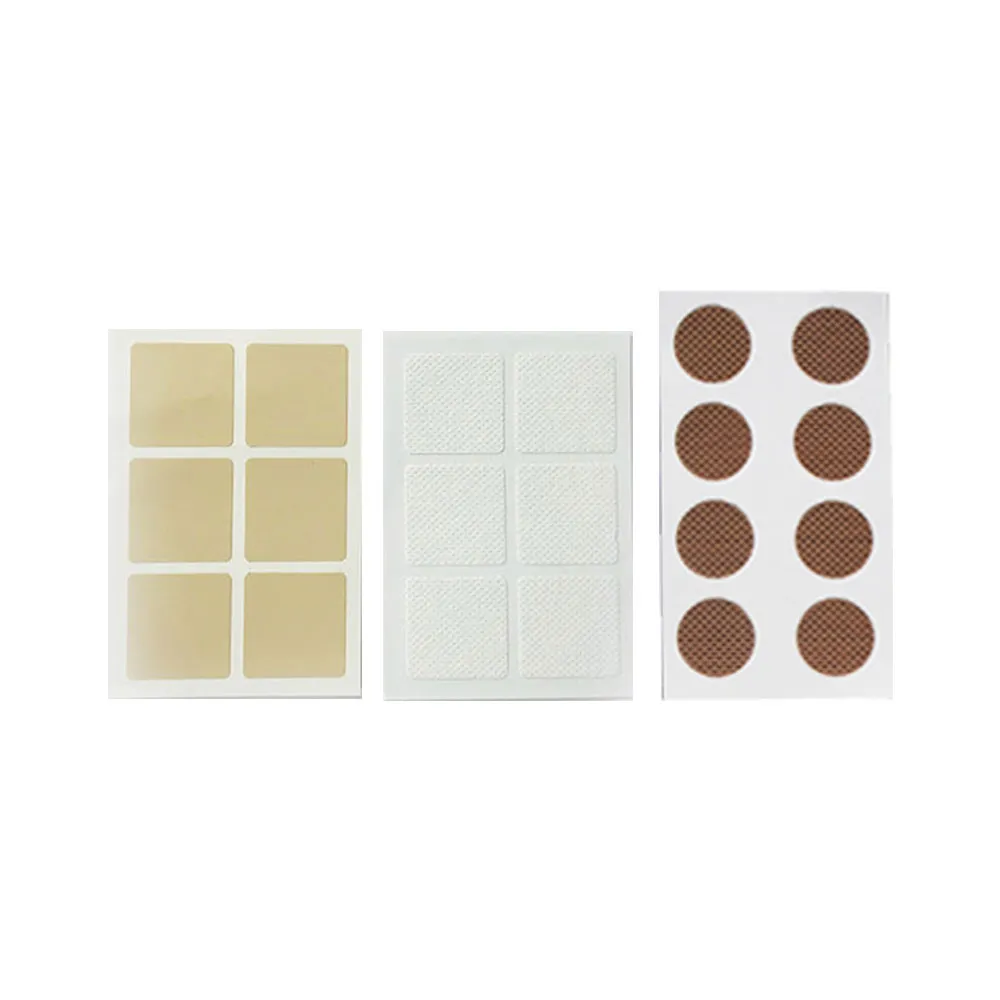
This is the most critical insight for any brand, e-commerce seller, or medical distributor looking to source patch products.
Consumers often assume that if "Vitamin B12" is listed on the ingredients, the patch works. In reality, vitamin patch performance is not only about the raw ingredients—it is entirely determined by manufacturing engineering.
A successful transdermal patch is a feat of micro-engineering. If the factory lacks expertise, the patch will fail. High-performance delivery requires:
Matrix Design: The active ingredients must be uniformly distributed throughout the adhesive. If the mixing process is flawed, one side of the patch will have too much ingredient, and the other will have none.
Adhesive Stability: The adhesive must maintain absolute skin contact efficiency for up to 24 hours without causing allergic reactions or chemical burns, all while allowing the vitamins to pass through it.
Permeability Control: Engineering the exact ratio of chemical enhancers to temporarily open the skin barrier safely.
Raw Material Purity: Sourcing ultra-micronized vitamins that are small enough to be absorbed.
Cleanroom Production Environment: Contamination during manufacturing ruins the delicate chemistry of a transdermal patch.
To put it bluntly: Poor manufacturing = zero reliable absorption. Partnering with an unverified factory means selling a placebo.
When your brand's reputation relies on complex transdermal science, you need a manufacturing partner with proven, industrial-scale expertise.
Hebei Feifan Biotechnology Co., Ltd., founded in 2015, is a premier, professional manufacturer specializing in self-heating products, transdermal medical patches, and advanced wellness patch systems. We do not just assemble products; we engineer high-performance delivery systems that bridge the gap between consumer wellness trends and medical-grade manufacturing.
Operating from a sprawling 20,000㎡ production facility, which includes state-of-the-art cleanroom workshops and nearly 100 automated production lines, Feifan Patch specializes in high-performance patch manufacturing, including OEM solutions for global brands.
Our Core Product Categories:
Disposable Steam Eye Masks
Hot Patches & Heating Therapy Systems
Energy Patches & Sleep-Aid Patches
Pain Relief Patches
Cooling Gel Patches
Heat Packs for Shipping and Logistics
Certifications & Manufacturing Strength:
We understand that global compliance is non-negotiable. Our facilities are strictly certified under ISO9001, ISO13485, CE, and FDA standards. Feifan Patch holds multiple patented heating and patch technologies, ensuring your product stands out in a crowded market. Our quality control (QC) protocols are relentless, monitoring every variable from raw material purity to the adhesive peel strength of the final inspection.
Our Corporate Mission:
Innovate Fearlessly. Craft Excellence. Build Iconic Brands.
The transdermal wellness market is expanding exponentially. To capture this growth, you need more than just a good idea—you need a reliable, technologically advanced manufacturing engine.
If you are developing a:
Vitamin patch product line
Energy patch or sleep patch brand
Pain relief patch OEM products
Warming patch or specialized medical patch systems
Feifan Patch provides comprehensive, turnkey solutions:
Private Label Manufacturing: Beautifully packaged, retail-ready products branded as your own.
Formula Customization Support: Our R&D team will help you engineer the perfect active ingredient matrix and permeation enhancers.
Stable Mass Production Capability: With 100 production lines, we guarantee stable lead times, even during your highest volume sales peaks.
Global Export Compliance: We navigate the complex regulatory landscapes so your products clear customs seamlessly.
Do not risk your brand's future on subpar manufacturing.
Contact Feifan Patch today to consult with our engineering team and begin developing your next high-performance patch product line. Let's build something exceptional together.
PREV