

Address:
North Of Anxia Village, Zhengding County, Shijiazhuang City, Hebei, China.

A vitamin patch is a type of transdermal delivery system designed to deliver nutrients through the skin over a period of time. Unlike traditional supplements such as pills or capsules, vitamin patches are applied directly to the skin, allowing active ingredients to be absorbed gradually into the bloodstream.
These adhesive patches typically contain a reservoir or matrix layer with vitamins, minerals, or other compounds, protected by a backing and secured with skin-friendly adhesive. They aim to provide a convenient, slow-release alternative for people who prefer not to swallow pills.
Vitamin patches rely on transdermal absorption, where nutrients diffuse from the patch through the skin layers and into the underlying blood vessels (capillaries). The process begins when the patch is applied to clean, dry skin—usually on areas like the arm, shoulder, or abdomen with good blood flow and minimal hair.
The skin's outermost layer, the stratum corneum, acts as a selective barrier. Only certain molecules (often smaller or more lipophilic/fat-soluble ones) can pass through effectively. Enhancers in some formulations (such as alcohols or lipids) may temporarily increase skin permeability to aid this process. Once through the epidermis and dermis, the nutrients enter the bloodstream for systemic distribution, bypassing the digestive tract and liver's first-pass metabolism.
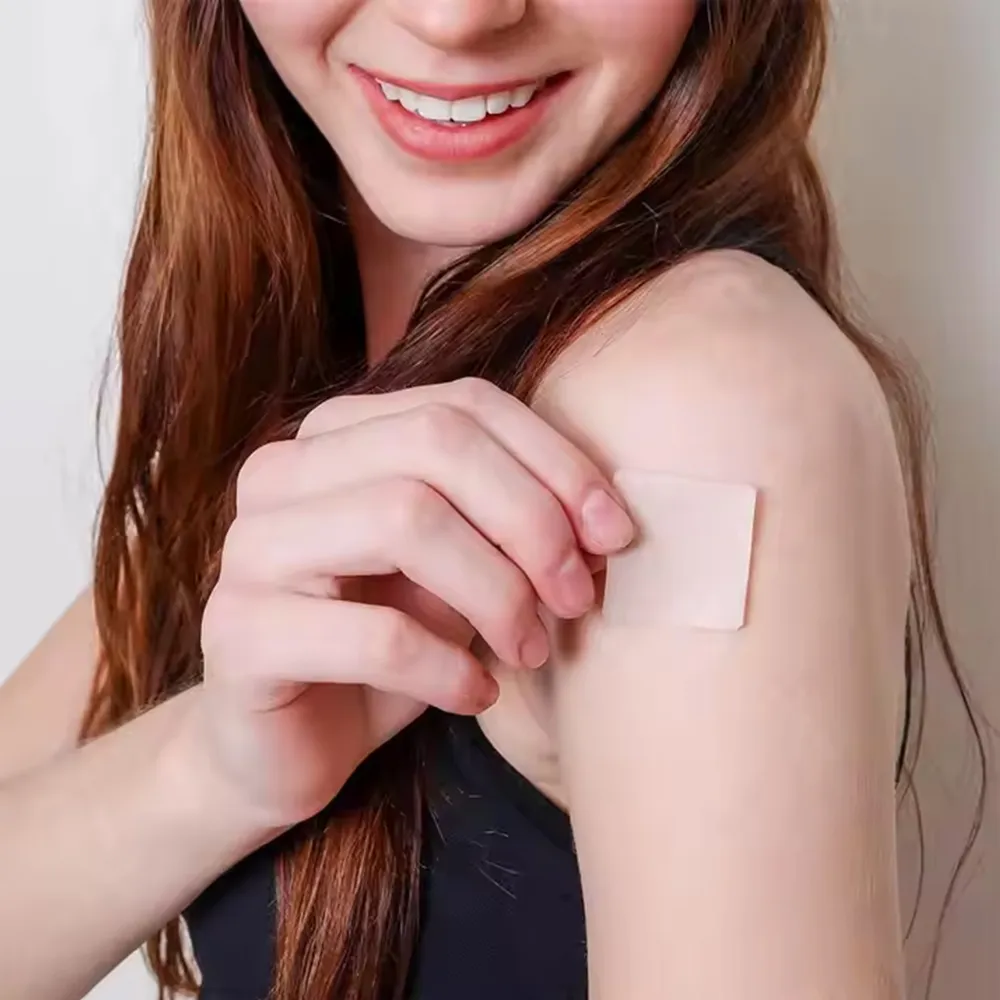
Transdermal delivery uses the skin as a gateway for controlled release. The patch's design—whether a reservoir with a rate-controlling membrane or a matrix where ingredients are embedded in a polymer—determines the release rate. Body heat and moisture help dissolve or diffuse the active ingredients steadily over hours (often 8–24 hours, depending on the product). This slow release aims to maintain more consistent nutrient levels compared to the peaks and troughs sometimes seen with oral doses.
Ingredient properties: Smaller, fat-soluble molecules (e.g., certain forms of vitamins A, D, E) generally penetrate better than large or highly water-soluble ones (e.g., some B vitamins or minerals like iron).
Patch quality and formulation: Adhesive strength, enhancers, and matrix design influence how well ingredients contact and cross the skin.
User factors: Application site, wear time, skin condition (dry vs. oily, thickness, hair), individual skin permeability, and consistent use all play roles. Absorption can vary significantly between people.
Oral pills are digested in the stomach and absorbed primarily in the intestines, which can lead to lower bioavailability for some nutrients due to breakdown by acids, interactions with food, or first-pass liver metabolism. Patches bypass the gut entirely, potentially reducing gastrointestinal side effects like nausea.
Pills are often easier to dose precisely with higher amounts of nutrients, while patches offer convenience—no swallowing, no water needed—and a steady release profile. However, patches may deliver smaller total quantities because of skin barrier limitations.
Pros:
No need to swallow pills (ideal for those with gag reflex, swallowing difficulties, or digestive issues).
Convenient and discreet for busy lifestyles or travel.
Potential for sustained, controlled release without digestive interference.
Cons:
Absorption rates and effectiveness can vary widely by individual and ingredient; scientific evidence is limited and mixed compared to well-studied oral supplements.
Not all vitamins/minerals penetrate the skin well; patches may contain lower doses overall.
Possible skin irritation, adhesion issues (especially on hairy or sweaty skin), and higher cost per dose.
Limited long-term clinical data for many formulations.
Vitamin patches come in various targeted formulas to address specific needs.
These provide a broad spectrum of essential vitamins and minerals in one patch, often marketed for daily overall support or specific groups like bariatric patients.
Commonly include vitamin B12, B vitamins, or herbal stimulants for sustained energy, focus, or combating fatigue without the crash of drinks or pills.
Formulated with melatonin, calming herbs (like chamomile or valerian), or magnesium to promote relaxation and better sleep when applied before bed.
These may contain collagen-supporting nutrients, antioxidants, glutathione, or vitamins aimed at skin health, anti-aging, or hair/nails support.
Vitamin patches may appeal to:
People who dislike swallowing pills or experience digestive discomfort from oral supplements.
Busy professionals or travelers seeking a simple, no-fuss option.
Individuals with certain medical conditions (e.g., post-bariatric surgery) where gut absorption is impaired—though evidence here is mixed and patches are not always superior.
Those prioritizing convenience and steady delivery in a wellness routine.
They are generally not a first-line choice for most healthy people who tolerate oral supplements well. Consult a healthcare provider before use, especially if you have skin sensitivities or nutrient deficiencies.
Effectiveness remains a point of scientific debate. While transdermal technology works well for certain pharmaceuticals (e.g., nicotine or hormone patches), evidence for vitamin patches is limited and often inconclusive. Some small studies show mixed results, with patches sometimes underperforming oral supplements in raising blood levels of nutrients like vitamin D, B12, or iron—particularly in populations with absorption challenges.
Fat-soluble vitamins may fare better than water-soluble ones, but patches generally cannot match the nutrient load of pills. Individual results vary based on formulation quality, skin factors, and consistency of use. They are best viewed as a supplementary option rather than a guaranteed replacement. More robust clinical trials are needed.
Vitamin patches are generally considered safe for most people when used as directed, with the main risks being mild skin reactions such as redness, itching, or irritation at the application site. Allergic responses to adhesives or ingredients are possible but uncommon.
Unlike FDA-approved drug patches, most vitamin patches are regulated as cosmetics or general wellness products rather than supplements or drugs, meaning they do not undergo the same pre-market efficacy and safety testing. Always patch-test on a small area first, follow instructions, and discontinue if irritation occurs. Pregnant individuals, those with sensitive skin, or people on medications should consult a doctor. Overuse or combining multiple patches is not recommended without guidance.
Look for products with:
Transparent ingredient lists and clear dosages.
Reputable manufacturing standards (e.g., GMP-certified facilities).
Clinically inspired or third-party tested formulations where possible.
Good reviews on adhesion, comfort, and minimal residue.
Consider patch size, wear duration, and whether the formula suits your specific needs (e.g., avoid iron-heavy patches if not required).
For businesses looking to enter or expand in the supplement or wellness market, vitamin patches offer attractive opportunities through OEM (original equipment manufacturing) and ODM (original design manufacturing) or private label services. Manufacturers can customize formulations (specific vitamin blends, enhancers for better absorption), patch size/shape, adhesive strength, release profile, and packaging design to match brand aesthetics and target audiences.
At Feifan Bio, one of the leading vitamin patch manufacturers in China, we specialize in the development and manufacturing of disposable transdermal patches, supporting global brands with flexible OEM and ODM solutions. Our team works closely with clients to create customized vitamin patch products tailored to different market needs — from energy and sleep patches to beauty and daily wellness solutions.
Typical options include low minimum order quantities (MOQ) for startups, scalable production, and support for compliant product positioning. This allows brands to differentiate with targeted products like bariatric, beauty, or energy-focused patches while maintaining consistent product quality.
If you're planning to launch or expand your vitamin patch product line, Feifan Bio offers end-to-end support — from formulation and sampling to mass production and packaging.
Vitamin patches provide a modern, convenient transdermal alternative to traditional supplements, with potential benefits in ease of use and steady delivery for certain users. However, they are not universally superior—effectiveness depends heavily on the specific nutrients, formulation, and individual factors, and they should complement rather than fully replace a balanced diet or proven oral options where appropriate.
Businesses interested in developing or sourcing high-quality vitamin patches can benefit from partnering with experienced manufacturers for custom solutions.