
Address:
North Of Anxia Village, Zhengding County, Shijiazhuang City, Hebei, China.

Winter comfort products are often purchased individually, but consumers may need different warming options for outdoor events, winter travel, commuting, and seasonal gifting. For brands and distributors, this creates an opportunity to build a coordinated product assortment around real customer needs. A well-planned winter comfort kit can combine suitable warming products, clear instructions, and convenient packaging to create a more useful seasonal offering.
FEIFAN.BIO offers warming product options for businesses exploring seasonal retail and private-label development. By considering hand warmers alongside complementary products, buyers can create assortments for different activities rather than relying on a single item. The key is to understand customer routines, packaging requirements, and product specifications before finalizing the range.
A winter comfort kit should solve a recognizable problem for its intended audience. Commuters may value compact products that fit into a bag or coat pocket. Outdoor event visitors may prefer convenient options that are easy to carry, while retailers may want multipacks that work for seasonal promotions.
When evaluating a hand warmers patch product, buyers should first clarify its actual design. Some warmers are intended to be held or placed in pockets, while adhesive warming products may have specific placement requirements. These formats should not be described as interchangeable.
A practical kit gives each item a clear purpose. Packaging should communicate the intended use, activation instructions, storage guidance, and any relevant restrictions. This helps consumers understand what they are buying and gives retailers a clearer way to explain the product range.
The right warming product depends on where and how customers intend to use it. A product for occasional errands may have different requirements from one marketed for outdoor events or extended periods outside.
Buyers should evaluate several factors:
Portability: Consider pack dimensions, quantity, and ease of carrying.
Intended use: Confirm whether the product is designed to be held, placed in a pocket, or applied to a specified area.
Performance: Review verified warming duration and the conditions under which it was assessed.
Instructions: Make activation and placement guidance easy to understand.
Retail format: Decide whether individual units, multipacks, or gift packaging suit the target channel.
A hand warmers patch should be described according to its verified design, not just a search term. FEIFAN.BIO buyers can explore the hand warmer product range when planning a winter assortment or private-label project.
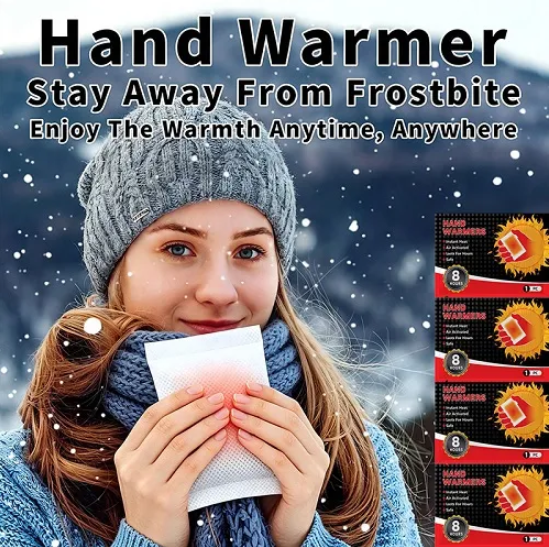
A warming product needs to fit both the customer's routine and the retailer's distribution process. Packaging affects portability and shelf presentation, while storage conditions and shelf life influence inventory planning. Heat duration should match the intended activity and be supported by supplier specifications.
Selection factor | What buyers should check | Why it matters |
|---|---|---|
Pack format | Individual pack, multipack, or gift packaging | Supports different sales channels |
Heat duration | Verified performance and test conditions | Helps set realistic expectations |
Instructions | Activation, placement, and restrictions | Improves clarity for users |
Storage | Recommended conditions and shelf life | Supports inventory management |
Product assortment | Fit with customer activities | Creates a more coherent kit |
Brands should review labeling and claims before launch. If a product has specific placement restrictions, these must remain clear on packaging and product pages. Accurate descriptions help customers make informed choices without overstating performance.
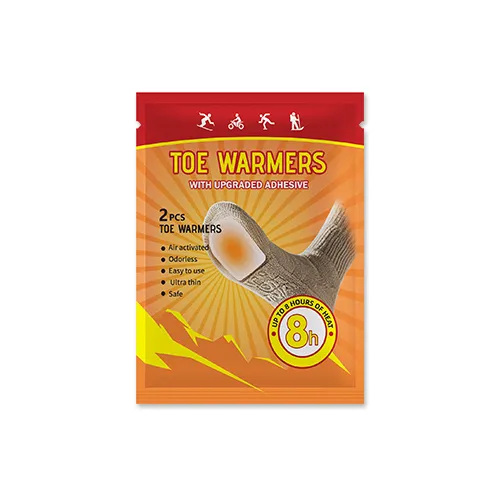
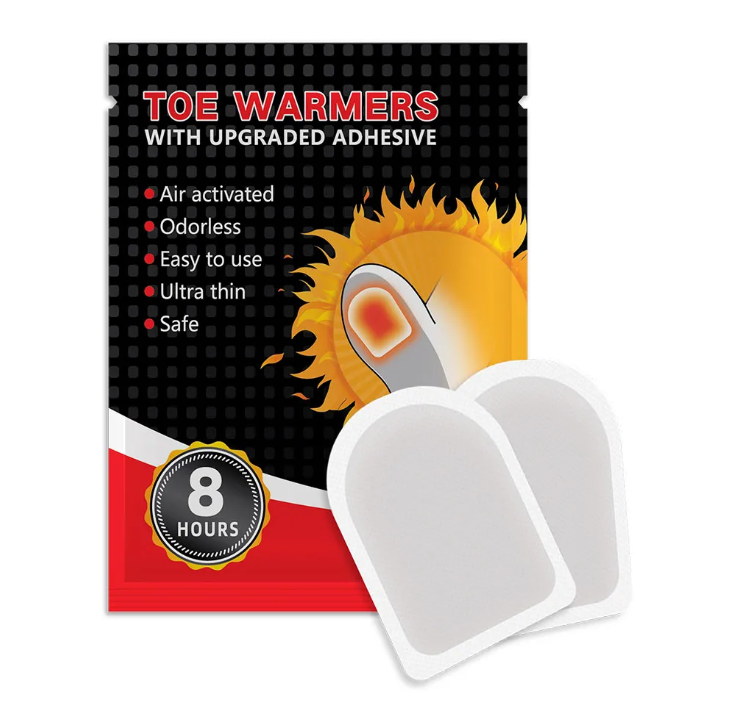
Different warming formats can complement each other when they address separate needs. Disposable hand warmers may suit consumers seeking a convenient single-use option, while toe warmers may be appropriate for specific footwear-related applications when the product instructions support that use.
For example, an outdoor activity kit could include a hand-warming product for general convenience and a separate foot-warming option for users wearing suitable footwear. Buyers should not assume that a toe warmer fits every shoe or that every warming product can be applied directly to the skin.
FEIFAN.BIO's adhesive toe warmers give buyers another option to evaluate. Before combining products, confirm their instructions, dimensions, target audience, and restrictions. Clear differentiation helps customers understand why each item is included and how its intended use differs.
A strong seasonal assortment begins with a defined audience. Travel retailers may prioritize compact packaging, while outdoor retailers may focus on activity-specific products. Corporate gift programs may place greater emphasis on presentation, branding, and convenient distribution.
For private-label development, buyers should prepare their target market, preferred formats, packaging design, estimated order quantity, and launch schedule. It is also useful to discuss artwork, minimum order quantities, production lead times, and available documentation with the supplier before confirming the assortment.
FEIFAN.BIO can discuss suitable warming options with businesses preparing a seasonal product line. Rather than selecting items simply because they belong to the same category, brands should build combinations around a clear customer need.
A well-planned winter comfort kit can turn individual warming products into a practical seasonal offering. The best approach is to match formats to customer routines, review verified specifications, and make packaging and instructions easy to understand. By combining suitable hand warmers with complementary options such as toe warmers, businesses can create a more purposeful assortment. FEIFAN.BIO buyers should prepare their target market, packaging preferences, and estimated order volume before requesting product details or a quotation.
Yes, provided each item serves a clear purpose and its intended use is explained accurately.
Not necessarily. Their placement and application requirements can differ, so buyers should check the specific product instructions.
Useful details include intended use, activation instructions, performance specifications, storage guidance, and relevant restrictions.
Potentially. Buyers should confirm packaging options, minimum order quantities, artwork requirements, and production timelines.
Packaging affects portability, shelf presentation, storage, and how easily customers understand the product.
Planning ahead allows time for product selection, packaging approval, production, and shipping before the sales season begins.