Address:
North Of Anxia Village, Zhengding County, Shijiazhuang City, Hebei, China.

Cold feet can make an otherwise comfortable winter outfit feel inadequate. Even with thick socks and insulated shoes, prolonged exposure to cold ground, low temperatures, or limited movement can leave feet feeling uncomfortable. A foot warmer can provide an additional source of localized warmth without requiring users to replace their regular winter footwear.
However, staying comfortable in cold weather is not simply about adding more heat. Socks, footwear fit, moisture, activity level, and the warming format all influence the final experience. Understanding how these factors work together can help users choose a more practical winter foot-care routine.
Feet are exposed to several conditions that can increase the sensation of cold. Outdoor temperatures are an obvious factor, but the surface beneath the feet can also contribute to heat loss. Standing or walking for long periods on cold ground can make feet feel colder even when the rest of the body is well insulated.
Limited movement can also affect perceived warmth. Someone standing at a winter event may experience cold feet differently from someone continuously walking or hiking. Moisture inside footwear is another consideration. Damp socks or accumulated moisture can make feet feel colder and less comfortable.
Footwear therefore needs to be considered as part of the overall warming system rather than as an isolated product. The right combination of insulation, fit, moisture management, and localized warmth can make a noticeable difference to winter comfort.
A disposable foot warmer patch is designed to provide localized warmth around the foot area during cold-weather activities. Unlike insulated socks or winter boots, which mainly help retain existing body heat, a disposable warmer provides an additional warming source for situations where insulation alone may not be sufficient.
Many disposable foot-warming products are compact and individually packaged, making them convenient to carry for commuting, travel, outdoor work, skiing, hiking, and other winter activities. Depending on the product design, an adhesive layer may also help keep the warmer in its intended position during use. The effectiveness and comfort of a foot warmer patch can depend on several factors, including its size, shape, warming duration, placement, footwear space, and surrounding temperature. For this reason, users should choose a product that matches the intended activity and always follow the manufacturer's instructions for placement and wearing time. For brands and distributors, these variables also create opportunities to develop disposable foot warmer patches for different markets, packaging formats, warming specifications, and application scenarios.A foot warmer can be useful when normal socks and footwear do not provide enough localized warmth for a particular situation. Feet warmers are especially practical when users expect to spend extended periods in cold environments but do not want to purchase specialized heated footwear.
Common situations include:
Commuting: A disposable warmer can add localized warmth during cold morning or evening travel.
Outdoor activities: Hiking, skiing, and outdoor events can involve long periods of exposure to low temperatures.
Winter work: Workers who remain outdoors or in cold environments may benefit from an additional warming option.
Travel: Compact disposable products can be convenient to carry without adding charging equipment to luggage.
Because disposable products are designed for single use, they can be individually packaged and kept ready until needed. This makes them particularly suitable for occasional winter use and travel situations where convenience is important.
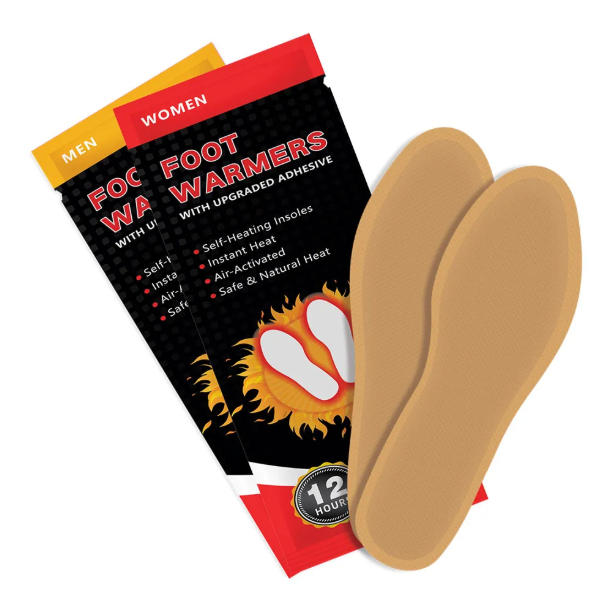
Adhesive foot warmers are designed for applications where keeping the warmer in a relatively stable position is useful. Compared with a loose warming pack, an adhesive format can reduce movement during walking when applied according to the product's intended use.
Placement is an important part of the user experience. The available space inside a shoe or boot, sock construction, walking activity, and product shape can all affect comfort. A warmer should not create excessive pressure or make footwear unnecessarily tight.
Users should always follow the manufacturer's instructions regarding where an adhesive foot warmer can be applied. The product's intended placement, wearing duration, and compatibility with socks or footwear should take priority over assumptions based on general warming products.
Hot foot warmers and thick socks serve different purposes, so they should not necessarily be viewed as competing solutions. Socks and footwear primarily help insulate the feet, while a warming product is designed to provide localized warmth.
| Option | Primary Role | Reusable | Localized Heat |
|---|---|---|---|
| Thick socks | Insulation | Yes | No |
| Insulated footwear | Heat retention | Yes | No |
| Hot foot warmers | Localized warmth | No | Yes |
| Heated footwear | Active heating | Yes | Yes |
For many winter situations, combining appropriate socks and footwear with a disposable warmer can be more practical than relying on any single element. The choice depends on temperature, activity, footwear space, and how long the user expects to remain outside.
Good winter foot comfort starts before adding a warming product. A simple routine can help users choose the appropriate combination for each situation.
Select socks that provide appropriate insulation without making the footwear excessively tight.
Make sure there is sufficient room for comfortable movement and any warming product intended for use inside the footwear.
Think about temperature, exposure time, activity level, and whether the feet may encounter moisture.
A disposable foot warmer can provide an additional source of warmth when ordinary insulation is not sufficient for the conditions.
Placement, wearing duration, and application should always follow the specific manufacturer's instructions.
For brands developing warming products, these considerations can also influence product design. FEIFAN BIO develops disposable warming products for different body-warming applications, including foot-warming formats that can be adapted to specific product concepts and packaging requirements.
Effective winter foot comfort comes from more than simply increasing temperature. Suitable socks, properly fitted footwear, moisture management, activity level, and localized warmth all contribute to the overall experience.
A foot warmer can be a practical addition when extra warmth is needed, particularly for commuting, travel, outdoor activities, and winter work. For product developers, understanding these real-world scenarios also helps create disposable foot warmers that balance portability, placement, comfort, and packaging for different markets.
Yes, if the specific product is designed for footwear use. Always follow the manufacturer's placement and usage instructions.
Consider the available shoe space, intended placement, and activity level. The warmer should not create excessive pressure or restrict movement.
They are designed to remain in position when applied correctly, but movement can vary depending on footwear and activity.
Yes. Individually packaged disposable foot warmers are lightweight, portable, and do not require charging equipment.
Insulated shoes reduce heat loss but do not actively generate warmth. Cold temperatures, moisture, limited movement, and footwear fit can still affect comfort.
Yes. Disposable foot-warming products can be developed with different shapes, packaging, warming specifications, and application formats.