


Address:
North Of Anxia Village, Zhengding County, Shijiazhuang City, Hebei, China.

Shipping live plants during cold weather requires more than choosing suitable packaging. Transit time, outside temperature, insulation, ventilation, and heat duration can all affect the condition of the shipment. heat packs for shipping plants are designed to provide supplemental warmth during transportation, helping brands, nurseries, and plant distributors manage cold-weather shipping more effectively.
A heat pack for plants provides an additional source of warmth inside a packaged shipment when ambient temperatures may become too low for the plant species being transported.
Cold exposure can become a concern when plants spend many hours in warehouses, delivery vehicles, or outdoor loading areas. However, a heat pack should not be viewed as a replacement for suitable packaging. Its role is to work together with insulation, ventilation, and appropriate packing methods.
For B2B buyers, the first question should therefore be the expected transit environment. A product designed for a short domestic shipment may require a different heat duration from one intended for longer-distance distribution.
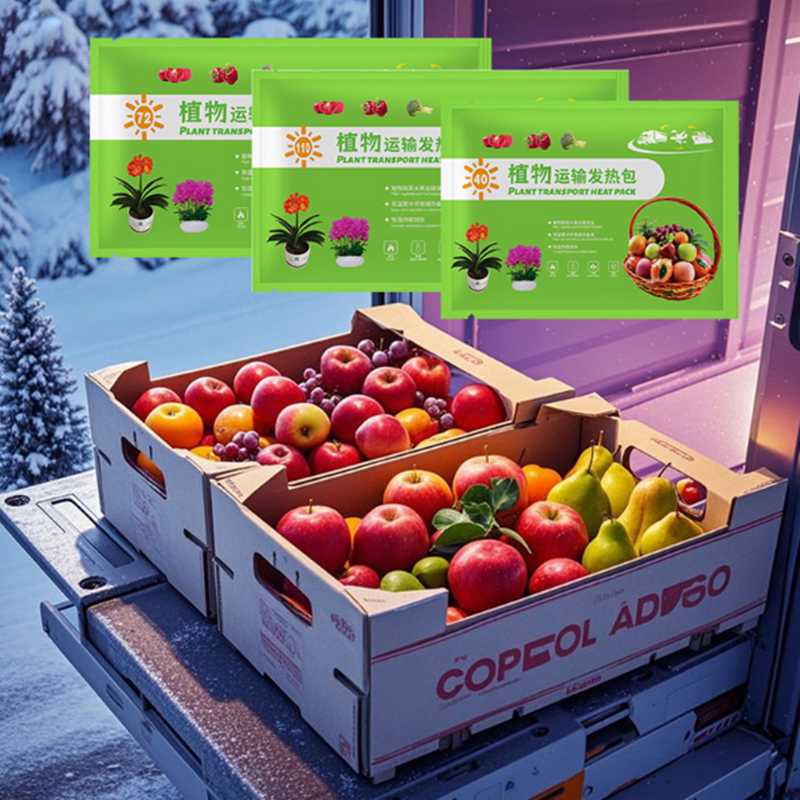
A complete plant-shipping system normally combines several elements rather than relying on heat alone.
Insulation: Helps reduce the rate at which external cold reaches the contents.
Heat source: Provides supplemental warmth during periods of low temperature.
Ventilation: Helps prevent excessive heat and maintain appropriate air exchange.
Plant protection: Prevents direct contact between the heat source and sensitive plant material.
Outer packaging: Protects the shipment during handling and transportation.
The heat pack should be selected according to the packaging structure and expected transit conditions. Using a stronger or longer-lasting product without considering the internal package environment may not produce the desired result.
When comparing a shipping heat pack, buyers should evaluate several specifications before placing a bulk order.
Heating duration: Match the expected heat time with the actual shipping window, including possible delays.
Pack size: The size should fit the shipping box without taking unnecessary space from the plant.
Heat output: Consider the size of the package and the insulation level rather than looking at duration alone.
Activation: Air-activated products can provide a simple solution without batteries or electrical connections.
Packaging: Individual packaging should protect the product during storage and transportation.
Customization: Brands may need different dimensions, heating duration, packaging, or private labeling for different markets.
Sampling is particularly important because the actual performance of a heat pack depends on its interaction with the surrounding packaging and shipping conditions.
A heat pack for plants is only one option for managing temperature during transportation. Different methods serve different shipping requirements.
| Method | Main Function | Suitable Consideration |
|---|---|---|
| Heat pack | Adds supplemental warmth | Cold-weather shipments |
| Insulated packaging | Slows temperature change | Most temperature-sensitive shipments |
| Heated container | Provides active temperature control | Specialized logistics |
| Ambient shipping | Uses surrounding conditions | Mild-weather, suitable plants |
For most ordinary plant shipments, heat packs are more practical as supplemental protection than as a standalone temperature-control system. Buyers should consider the plant species, package size, expected transit time, and seasonal conditions before selecting a solution.
Positioning is an important part of using heat packs for shipping plants. The heat source should not simply be placed directly against sensitive leaves, stems, or roots.
Instead, packaging designers should consider how the heat will distribute throughout the box. Insulation can help moderate temperature changes, while sufficient ventilation can reduce the possibility of excessive heat accumulation.
Brands shipping plants internationally should also remember that temperature protection does not replace import or phytosanitary requirements. Plant shipments may be subject to inspection and other requirements depending on the destination and plant material involved.
For suppliers, providing clear application instructions can therefore be just as important as providing the heat pack itself.
A useful supplier inquiry should include the intended plant type, approximate package dimensions, expected transit duration, shipping season, target market, and packaging structure.
Buyers should ask suppliers to confirm the recommended heat duration, product dimensions, activation requirements, storage conditions, packaging options, and available customization. Sample testing under representative shipping conditions is also recommended before large-scale purchasing.
FEIFAN BIO provides heat packs for shipping applications and can support customized product requirements for brands and distributors. Buyers can use the heat pack for shipping product range as a starting point when discussing specifications and packaging requirements.
Choosing heat packs for shipping plants requires more than selecting the longest-lasting warming product. The right solution depends on transit time, package size, insulation, ventilation, plant sensitivity, and expected weather conditions. Heat packs work most effectively as part of a complete cold-weather packaging system. For brands and plant distributors, defining these requirements before sampling can make it easier to select the appropriate heating duration and format. A supplier capable of adjusting product specifications and packaging can also provide greater flexibility for different shipping routes and seasonal requirements.
No. Different plants have different temperature tolerances, so the appropriate heating strategy should be determined according to the plant and shipping conditions.
There is no universal duration. The required heating time depends on transit time, weather, packaging, and the plant's temperature requirements.
No. A heat pack provides supplemental warmth, while insulation helps slow temperature changes.
Direct contact should generally be avoided unless the product and packaging design specifically allow it. Positioning should prevent excessive localized heating.
Depending on the supplier, dimensions, heating duration, and packaging may be customized for different shipping applications.
Yes. Testing under representative packaging and shipping conditions can help buyers verify whether the selected heat duration and product format are appropriate.