
Address:
North Of Anxia Village, Zhengding County, Shijiazhuang City, Hebei, China.

For brands entering the self-heating eye care market, choosing an eye mask manufacturer involves more than comparing product prices. Heating duration, temperature characteristics, materials, fragrance options, packaging, and customization can all affect the final product.
A reliable supplier should also understand how the product will be positioned and packaged for its target market. Defining these requirements before production can help brands reduce sampling problems and create a more consistent retail product.
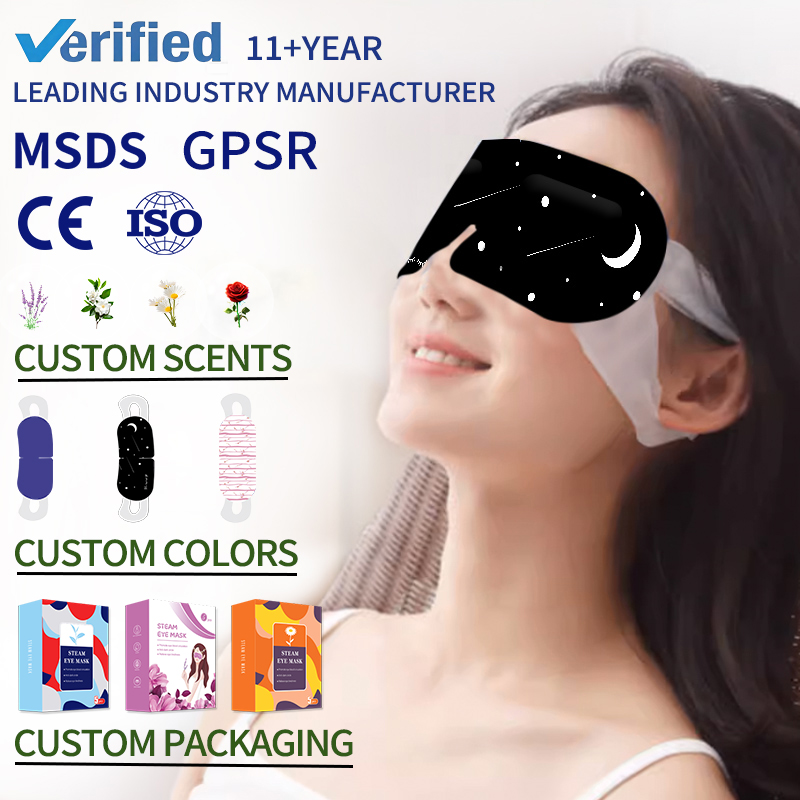
An eye mask manufacturer should be able to provide more than a standard catalog product when a brand requires private label development.
Depending on the project, customization may involve:
Product dimensions and overall design
Heating duration and heating characteristics
Surface materials and comfort
Fragrance or fragrance-free options
Individual and retail packaging
Logo, printing, and visual branding
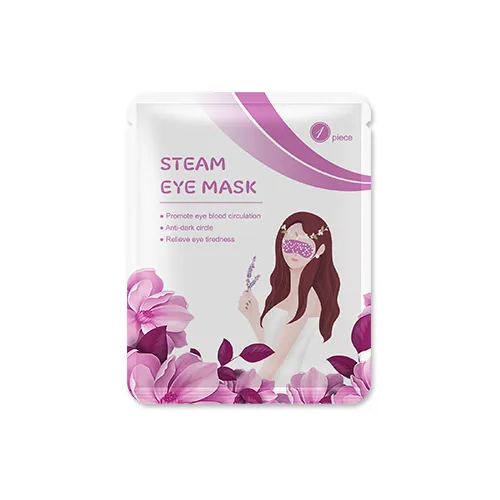
FEIFAN BIO's steam eye mask uses a self-heating structure containing cotton non-woven fabric, activated carbon, iron powder, and water. This structure generates warmth after activation and creates a comfortable steam-like experience around the eye area.
Its product offering supports customization of product specifications, heating performance, fragrances, and packaging.
For brands, these options make it possible to develop different versions for relaxation, travel, sleep, wellness, or seasonal retail without completely changing the product category.
A disposable heated eye mask uses a self-heating mechanism to generate warmth after activation. The heat is then delivered around the eye area during the intended period of use.
The steam eye mask provides approximately 40 minutes of warmth.
For retail brands, this usage cycle can support positioning around relaxation, rest, travel, and personal care. Packaging should clearly communicate how the product works, the expected warming duration, and storage requirements before opening.
The product experience also depends on factors beyond heat generation. Soft materials, comfortable fit, fragrance selection, packaging design, and easy activation can all influence how consumers perceive the finished product.

For a disposable self-heating eye mask, buyers should confirm the complete specification before approving samples.
Important factors include:
Heating duration: Define the expected usage period and make sure it matches the product positioning.
Heating characteristics: Confirm the expected warming performance based on product specifications and testing.
Material: Evaluate softness, breathability, and overall comfort.
Fragrance: Decide whether the product should be scented or fragrance-free.
Packaging: Individual packaging should protect the product and support retail presentation.
Customization: Confirm options for product specifications, appearance, packaging, and branding.
Instructions: Ensure activation and usage directions are clear for the target market.
These specifications should be tested through samples before mass production because actual user experience depends on the complete product structure.
A disposable heated eye mask differs from a traditional eye compress in both convenience and product structure.
| Factor | Disposable Heated Eye Mask | Traditional Eye Compress |
|---|---|---|
| Heating method | Self-heating | External heating or reusable system |
| Preparation | Ready to activate | Usually requires preparation |
| Usage | Single use | Often reusable |
| Heating duration | Defined by product design | Depends on heating method |
| Packaging | Individually sealed | Usually reusable |
| Retail positioning | Travel, relaxation, wellness | Home eye-care routine |
For brands, the disposable format can offer greater convenience because consumers do not need to prepare hot water or heat a reusable product before use. However, product claims and instructions should remain consistent with the actual design and testing results.
Product differentiation does not have to depend entirely on stronger heating. Brands can build different versions around user preferences and market positioning.
A basic steam eye mask can focus on warmth, comfort, and relaxation. Another version may emphasize fragrance options, premium packaging, or different material choices. Travel-oriented products can prioritize compact individual packaging, while wellness brands may develop coordinated packaging and multiple fragrance options.
This gives brands more opportunities to create a recognizable product range while keeping the underlying self-heating technology consistent.
For a manufacturer, the ability to adjust these elements can also simplify the development of multiple SKUs for different markets.
Before choosing an eye mask manufacturer, buyers should confirm the product specification, sample process, customization capabilities, packaging options, and production requirements.
A useful RFQ should include the target application, preferred product format, heating duration, heating characteristics, fragrance preferences, packaging concept, branding details, and estimated order quantity.
Buyers should also request samples before mass production. Testing can help evaluate heating performance, fit, material comfort, fragrance intensity, packaging quality, and user instructions.
FEIFAN BIO provides OEM and ODM support for steam eye mask projects, including customization of product specifications, heating performance, fragrances, and packaging. For brands developing a private label product, discussing these requirements at the beginning of the project can help reduce unnecessary revisions later.
Choosing an eye mask manufacturer should begin with the product requirements rather than the factory quotation alone. Heating duration, heating characteristics, materials, fragrance, packaging, customization, and sampling all contribute to the finished product.
A disposable steam eye mask can be developed for different retail applications, from relaxation and travel to broader wellness collections. For brands, clearly defining the target market and product experience before sampling makes supplier communication more efficient and provides a stronger basis for evaluating the final product before mass production.
The steam eye mask provides approximately 40 minutes of warmth. Actual user experience may vary depending on usage conditions and product specifications.
Yes. Fragrance-free specifications can be discussed as part of product customization.
Yes. Individual packaging and broader retail packaging can be developed according to the brand's requirements.
No. They are designed as single-use products and should be disposed of after use.
Heating performance can be discussed as part of an OEM/ODM development project, depending on the available product specifications.
Yes. Samples allow buyers to evaluate heating performance, comfort, fragrance, packaging, and overall product experience before confirming bulk production.